Train first responders
Practical trauma skills and a simple way to decide how urgent a patient is.
 RESPOND
Prehospital trauma care · Guatemala
R.E.S.P.O.N.D. Guatemala connects the firefighters who bring trauma patients in with the hospital teams who receive them: training, an early alert, and data on what happens next.
01 · The reality
In Guatemala, most people hurt in crashes, falls or violence reach the hospital in a firefighter ambulance. Many firefighters are volunteers with little medical training, and there is no national program that teaches them trauma care.
02 · Train
Firefighters learn a simple checklist used by trauma teams worldwide. Each letter is one question to answer, in this order:
03 · Notify
On the way, the firefighter answers a few yes-or-no questions on a phone. The app sends the hospital a short alert, so doctors can get ready before the patient arrives.
04 · Measure
At Hospital Roosevelt, every patient is recorded from arrival to discharge. The data will help us learn whether the training and the alerts change how quickly patients get care.
R.E.S.P.O.N.D. Guatemala
Why this matters
What happens between the scene and the hospital door can decide whether a patient survives. R.E.S.P.O.N.D. Guatemala works on that stretch of care, together with the firefighters who provide it and the hospital that receives the patients.
Practical trauma skills and a simple way to decide how urgent a patient is.
A short alert from the ambulance so the trauma team is ready when the patient arrives.
A trauma registry at the hospital and a community where firefighters learn from each other.
Three aims
A stepwise research program: a practical tool first, a pilot with real firefighters second, and a plan to grow across stations third.
Training, clinical decision support, hospital pre-notification and a community of practice, designed with bomberos and hospital staff. Ready for stakeholders in December 2026.
A pre-post study with a cohort of about 35 to 50 bomberos: knowledge test, verbalized skills stations, confidence and usability, plus triage compared with the hospital's expert assessment.
Interviews with bomberos and hospital teams on barriers and facilitators, to plan a multi-station study and a sustainable transition.
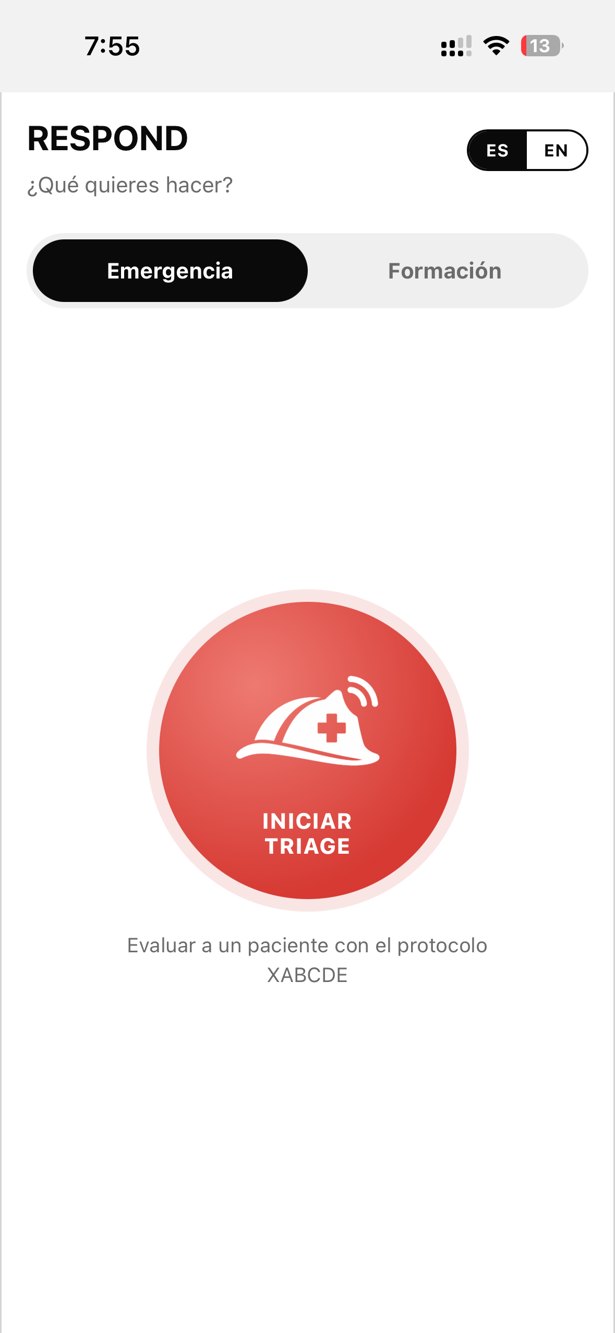
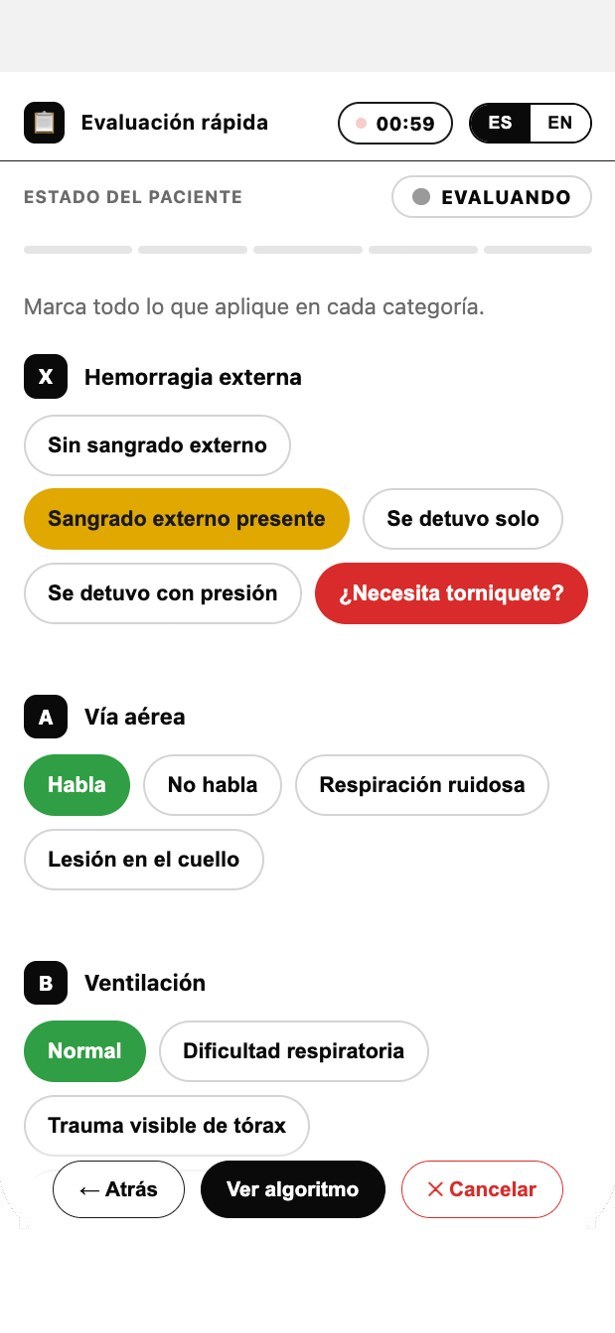
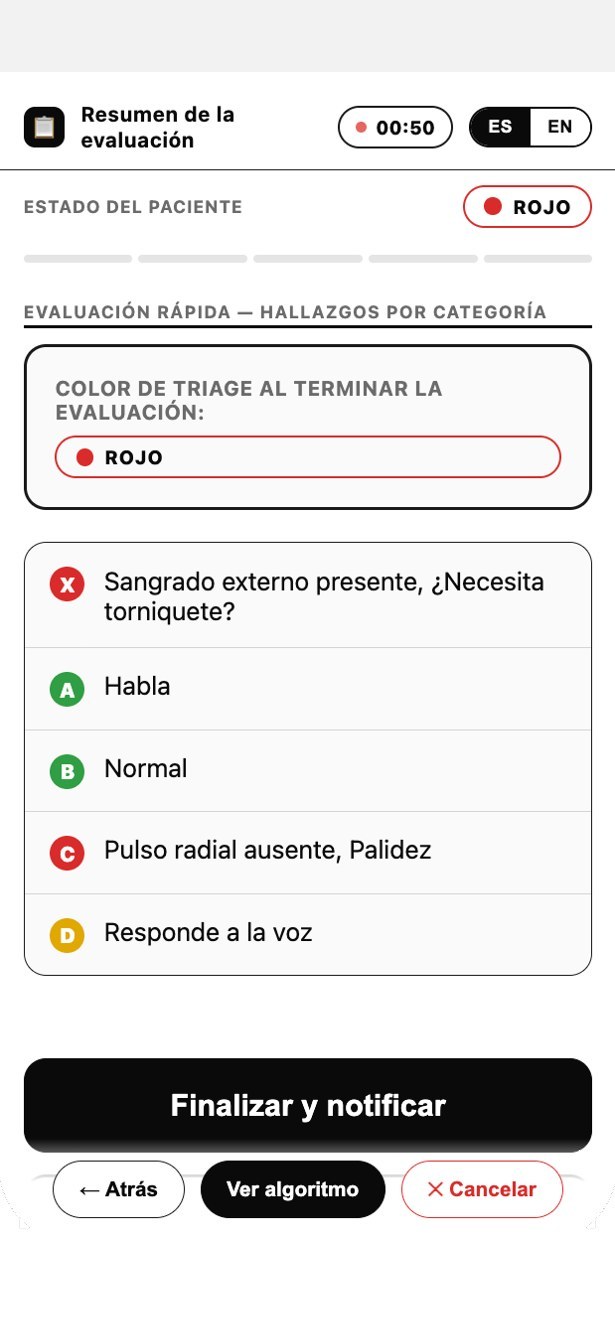
Screens from the working prototype (test patient).
The app
Simple questions, clear steps and a triage color the app calculates, so the firefighter does not have to memorize it.
Five-minute modules with practice questions and badges. Real triage unlocks when training is done.
Yes/no questions per letter. The bombero chooses a color before seeing the app's, so we learn what was really learned.
A structured alert with the per-letter summary and a 4-digit code that links the patient to the registry.
Peer-to-peer support and learning between stations and with the hospital.
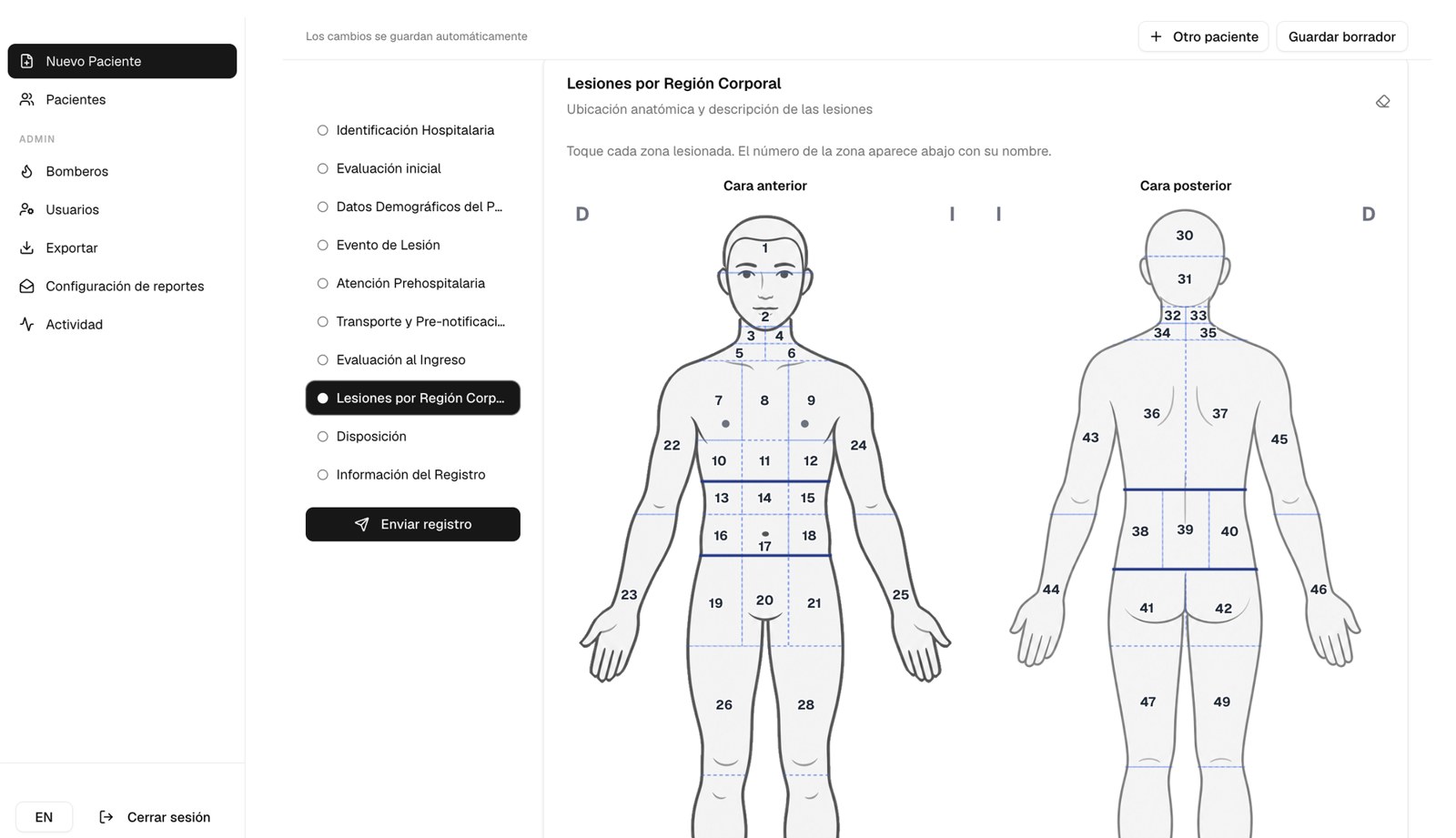
The registry
Hospital Roosevelt is one of the two public hospitals in Guatemala that can treat the most severe trauma. The registry gives its team a structured record of who arrives, how they arrive and what happens to them.
We built the registry with the hospital team, field by field, for the way their trauma bay works. Registrars began capturing patients in October 2026, and each record links to the firefighters' alert, so the study can follow a patient from the scene to discharge.
Research questions
The project is being tested now. These are the questions the pilot and the registry are designed to answer.
Timeline
Team defines the study and redesigns the registry field by field.
Registrars begin capturing patients at Hospital Roosevelt.
Interviews with bomberos and hospital teams (Aim 3).
The finished app is presented to firefighters and the hospital (Aim 1).
Pre-test, training with the app, post-test (Aim 2).
Analysis of the pilot is complete.
The intervention deployed across two or three fire stations.
The team
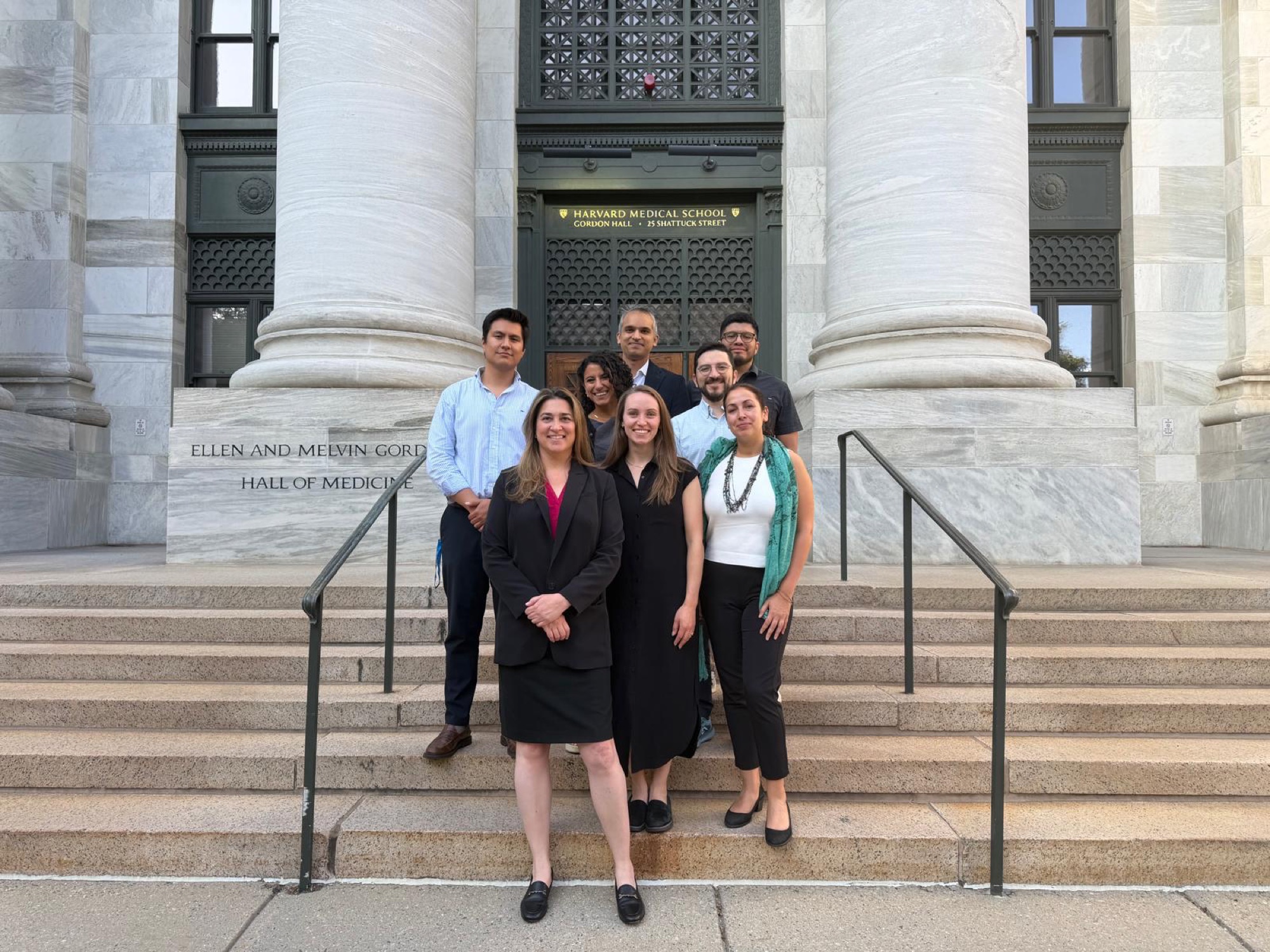
Surgeons, emergency physicians, public health researchers and engineers from several countries, working side by side with the bomberos and the staff of Hospital Roosevelt.
Training, notification and data, built around the realities of prehospital care in Guatemala.